



March 1st, the second edition of Jazz with Jajja, organised by Natasha Karugire, took place at President Yoweri Museveni’s sprawling ranch in Kisozi, Gomba District.
I am among many Ugandans encouraged by the emergence of this conversation series, the embarrassment of Kasuku’s begging notwithstanding. I think, if properly structured, this engagement can help cultivate an ideological foundation among Uganda’s youthful population and nurture a politically conscious citizenry capable of navigating an increasingly uncertain world.
A Memory from 1989
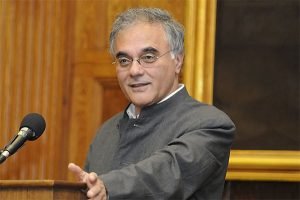
My appreciation for public dialogue dates back to 1989. As a nine-year-old, my father and two of his brothers took me to a public forum at the recently refurbished Kampala Sheraton Hotel, organised by the Makerere University Academic Staff Association. That event remains memorable because, perhaps for the first time in our young nation’s history, a sitting head of state took no offence when a leading scholar, Prof. Mahmood Mamdani, delivered a highly critical analysis of the NRA/M government, questioning the “flowering of democracy” promised in January 1986.
That same year marked another defining moment in Uganda’s national consciousness. The death of Philly Bongole Lutaaya confronted the country with the devastating reality of HIV/AIDS. His passing followed a courageous two-year struggle during which he voluntarily made his illness public, becoming a powerful testament to the seriousness of the epidemic. At the same time, President Museveni consistently used public platforms to warn of the disease and to call for the abandonment of harmful social practices.
While Uganda engaged in internal debate and grappled with public health challenges, regional political currents were also unfolding. A section within the National Resistance Army, composed largely of ethnic Tutsi revolutionaries and led by Maj. Gen. Fred Rwigyema organised a return to Rwanda. On October 1st, 1990, under the rubric of the Rwanda Patriotic Army, they crossed into Rwanda at Kagitumba and launched a war against the regime of President Juvénal Habyarimana.
Globally, this period was equally transformative. On December 20th, 1989, the United States launched Operation Just Cause against Panama, resulting in the capture of the country’s leader, Manuel Noriega. Even more consequential was the fall of the Berlin Wall on November 9th, 1989, which paved the way for German reunification and signalled the imminent collapse of the Soviet Union. Its dissolution in 1991 marked the end of a bipolar global order dominated by the competing ideological systems of capitalism and communism.
In many respects, therefore, 1989 was a watershed year that reshaped political, social, and ideological trajectories across Africa and the wider world. The transformations of that period, alongside advances in information and communication technologies, helped define the global realities of the last 4 decades.
The Changing Global Order and Uganda’s Youth
Yet the true test of our time is whether Uganda’s youth fully comprehend the rapidly changing global realities now reshaping the international order.
The post-Cold War optimism that followed 1989 has steadily given way to a more transactional and inward-looking global politics. Today’s world is increasingly driven by narrow national interests, strategic competition, and raw power.
The emergence of the “America First” doctrine under President Donald Trump signals a decisive shift in global leadership. This shift reflects a retreat from international responsibility and a prioritisation of domestic interests above global stability. For Africa, it suggests a sobering reality: external powers will increasingly engage the continent not primarily as partners in development, but as competitors for strategic advantage.
Across Europe, growing political cynicism, economic anxiety, and rising nationalist sentiment have weakened the continent’s historic commitment to international solidarity. Europe’s inward turn, shaped by migration pressures, security concerns, and economic protectionism, risks reducing Africa once again to a theatre of external intervention, NOT a partner in shared progress.
Taken together, these trends signal the gradual return of imperial patterns of engagement with Africa. Not colonialism in its classical administrative form, but a subtler system of economic dependence, strategic manipulation, and ideological influence. The contest for minerals, markets, and geopolitical alignment increasingly mirrors earlier imperial rivalries, albeit under new language and institutions.
For Uganda, these shifts carry immediate domestic implications. A nation without ideological clarity risks becoming vulnerable to external influence, internal fragmentation, and elite capture of state institutions. A youthful population disconnected from global realities can easily become a tool of populism, identity politics, or foreign strategic interests.
Yet many young citizens today encounter politics primarily through social media immediacy rather than historical reflection. Global transformations that will shape their future are often perceived as distant abstractions. Without ideological grounding, societies risk becoming passive arenas in which external powers pursue their interests.
Lessons of 1989: Dialogue as National Defence
The events of 1989 offer instructive lessons for confronting these challenges.
First, periods of global transition demand intellectual vigilance. As I have previously stated, the collapse of old systems does not end history. Instead, it opens space for new contests of power.
Second, national resilience depends on a politically conscious citizenry. Uganda’s confrontation with HIV/AIDS, its internal debates about governance, and the regional transformations of the time demonstrate the power of public awareness in shaping national direction.
Third, open dialogue strengthens societies. The willingness of leaders, scholars (including thought leaders), and citizens to engage in frank public discussion fosters ideological formation and national purpose.
These lessons suggest that Africa’s greatest defence against renewed external domination is not military power alone, but intellectual independence, historical awareness, and civic responsibility.
Are Conversations Like Jazz with Jajja the Answer?
It is within this context that initiatives such as Jazz with Jajja must be evaluated.
If such platforms remain merely social gatherings or ceremonial engagements, their impact will be limited. But if they evolve into spaces of serious intergenerational dialogue where history, ideology, governance, and global trends are openly examined, they can contribute meaningfully to national consciousness.
They can cultivate historical awareness among young citizens, foster ideological clarity about Uganda’s national interests, encourage critical engagement with global power shifts, and strengthen the intellectual foundations of sovereignty.
However, no single forum can substitute for a broader national culture of inquiry. Universities, media institutions, political organisations, and state structures must all participate in nurturing citizens capable of independent thought and informed judgement.
The Burden of Our Generation
The central question, therefore, is not whether global power politics will intensify (history suggests that it will) but whether Uganda will produce a generation intellectually prepared to respond.
The lesson of 1989 is clear: nations that understand the forces shaping their time can shape their destiny. Those who do not risk becoming objects of history rather than its authors.
The promise of dialogue, whether at a hotel hall in 1989 or at a ranch in Kisozi today, lies in its capacity to awaken national consciousness. The burden upon Uganda’s leadership and its youth is to transform conversation into ideological clarity, awareness into civic responsibility, and reflection into national purpose.
Only then can Uganda meet the changing world not with uncertainty, but with confidence, direction, and sovereignty.
