


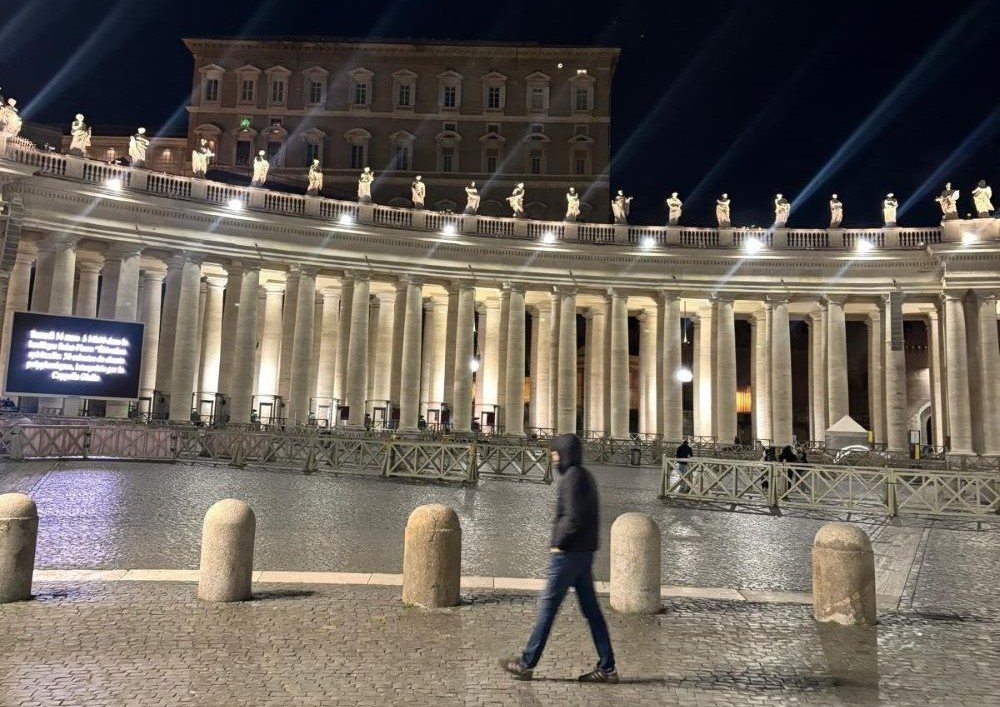
Pope Leo XIV has officially moved into the renovated papal apartment inside the Apostolic Palace, taking up residence on March 14 in the historic quarters that Pope Francis chose not to use during his pontificate. The apartment sits on the third floor of the palace and overlooks St. Peter’s Square, long regarded as the traditional residence of the pope.
The move is being seen as more than just a change of address. As Leo’s pontificate approaches its first anniversary, the decision signals a new stage in his leadership, one that appears more settled, more structured, and more visibly rooted in Vatican tradition. Vatican officials said some of his closest collaborators will also live alongside him in the residence, showing a more consolidated inner circle around the pope.
Since his election in May 2025, Leo had continued living in his modest apartment inside the Palazzo del Sant’Uffizio, where he had stayed while serving as prefect of the Dicastery for Bishops. That arrangement remained in place while the papal apartment underwent months of renovation after sitting unused throughout Francis’ papacy. Reports said the work was extensive, with upgrades needed to modernize electrical, plumbing, and other essential systems.
The apartment itself carries deep symbolic weight. For more than a century, popes traditionally lived in the Apostolic Palace overlooking St. Peter’s Square. Francis broke with that custom, choosing instead to remain at Santa Marta, the Vatican guesthouse, saying he preferred to live among other people rather than in a more isolated formal residence. His decision became one of the clearest expressions of his simple personal style and his reluctance toward the ceremonial side of the papacy.
Leo’s choice points in a different direction. The first pope born in the United States has already shown that he is more at ease with the visible traditions of the office, from papal dress to formal symbols of authority. His move into the Apostolic Palace has therefore been interpreted by many observers as a sign that his papacy is beginning to take on a more traditional public shape.
The residence includes several significant rooms tied closely to papal life, including the private study where the pope appears each Sunday to lead the Angelus prayer, along with a library and a chapel. Some reports have also noted that the renovated quarters include additional private amenities, including a small gym.
The timing of the move adds to its significance. Just days before, Leo made another notable step in shaping his administration by appointing Archbishop Luis Marín de San Martín to lead the Vatican’s charity office. Together with the move into the palace, the moment suggests a pontificate that is beginning to move with greater confidence after a careful and measured start.
By the evening of March 14, the change had become visible in the simplest way. A light could be seen glowing from the Apostolic Palace, a small sign to those in St. Peter’s Square that the historic residence was no longer empty. After years in darkness, the papal apartment was alive again, and with it came a sense that Pope Leo XIV is entering a new chapter of his reign.
