


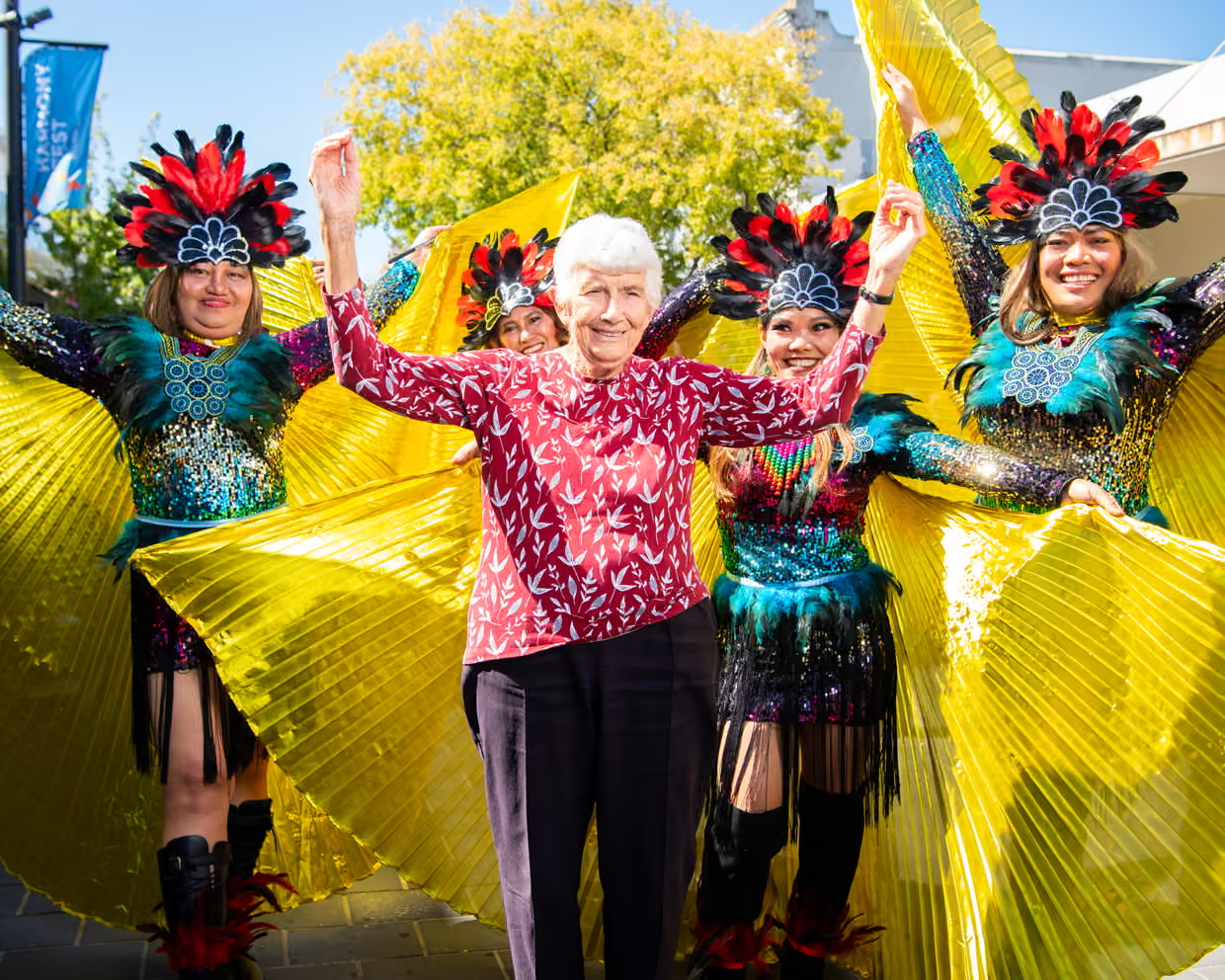
Australians are increasingly taking part in religious and cultural festivals outside their own traditions, from Lunar New Year and Ramadan to Diwali and Passover, reflecting the country’s growing diversity and a wider desire for connection across communities. A recent Guardian feature said this trend is being driven less by ideology and more by neighborliness, curiosity and shared celebration.
The broader social backdrop supports that shift. Australia’s Department of Home Affairs publishes an annual calendar of cultural and religious dates specifically to encourage awareness and appreciation of the many traditions that form part of Australian life, showing that multicultural recognition is now part of mainstream civic culture.
Recent community reporting also shows how these celebrations have spread well beyond major cities. ABC News reported this week that Iranian Australians in regional New South Wales were marking Nowruz through poetry readings, music and community gatherings, even as the war in Iran cast a shadow over the festival. Organizers said the events helped people feel connected, especially those far from family.
Together, these examples point to a simple idea: in Australia, festivals are increasingly becoming shared community moments rather than events observed only by one faith group. The result is a form of multicultural life where different beliefs remain distinct, but celebration, empathy and belonging are often shared. This last point is an inference based on the reported trend and official multicultural guidance.
