


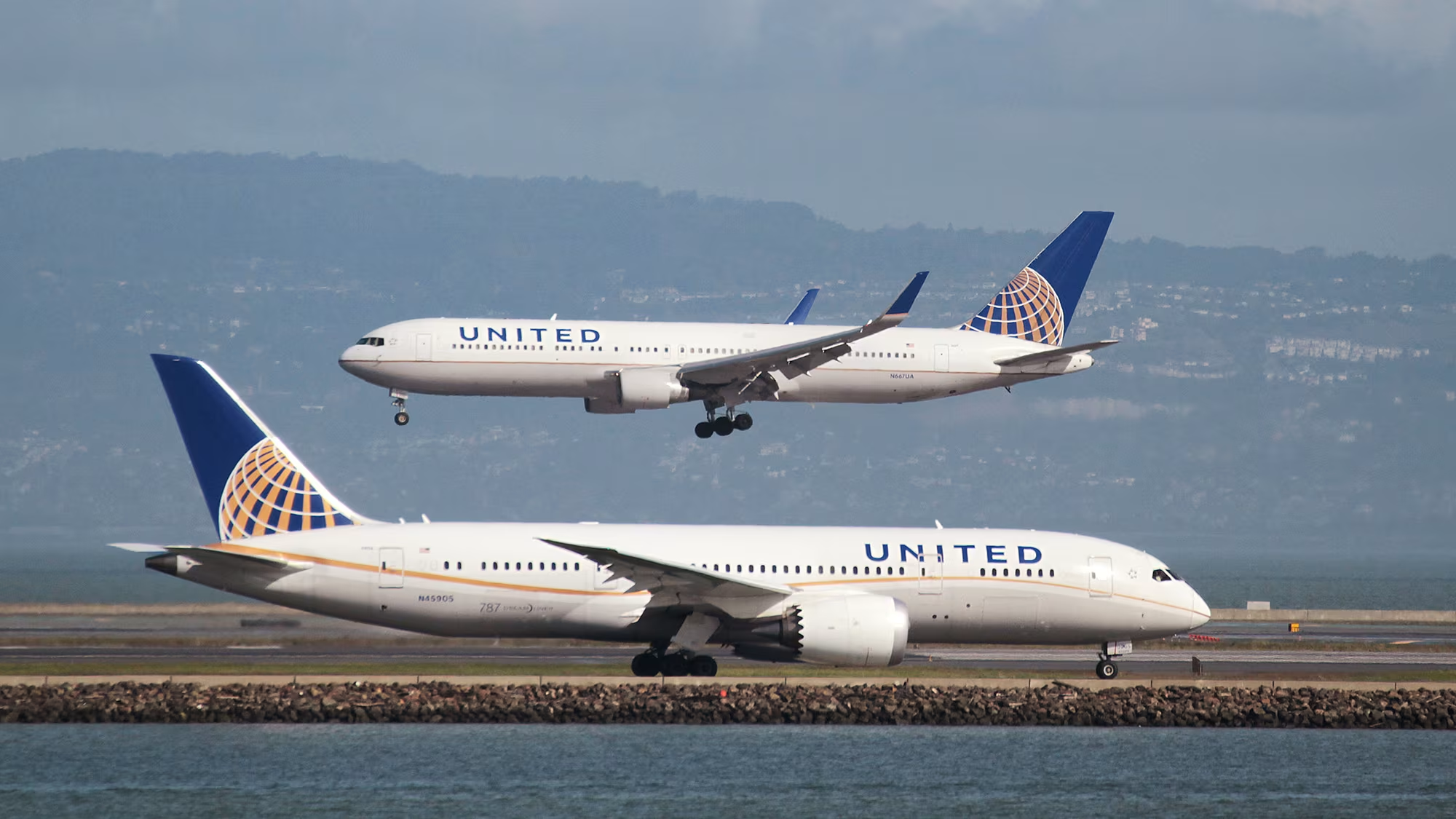
Step aboard a Boeing 767 operated by United Airlines and you’ll encounter the carrier’s very latest cabin comfort experiences — a smart foyer with gray walls and the rich blue United globe logo, rows of Polaris business-class suites, a dark purple premium economy section and blue economy seats equipped with the latest inflight entertainment systems.
While the cabin fittings might be everything a traveler expects from one of the world’s leading airlines in 2026, on some 767s there’s an experience they probably didn’t expect — a ride on one of the oldest airplanes that United flies.
United took delivery of four 767-300ERs in the spring of 1991 that, a quarter of a century later, still safely ply the skies on routes like Newark-London and Washington-Geneva. Their vintage, for the most part, is unknown to the flyers onboard.
While jetliner travel may still feel like a creation of the modern age, it’s now been around for more than 75 years. And while most of us would like to think we’re boarding a plane that represents the cutting edge of aviation, many modern aircraft can spend decades in service.
“Airplanes are built incredibly durably,” says Nathaniel Pieper, the recently hired chief commercial officer of American Airlines and a long-time fleet guy who spent time at Alaska Airlines, Delta Air Lines and Northwest Airlines.
Pieper would know. Throughout his career, he helped his employers find deals on older, used planes they could use to grow operations with much lower upfront cost than if they’d recruited new models fresh from the factory floor.
All these workhorses of the sky needed to ensure many more years of service was routine maintenance and an updated interior.
