


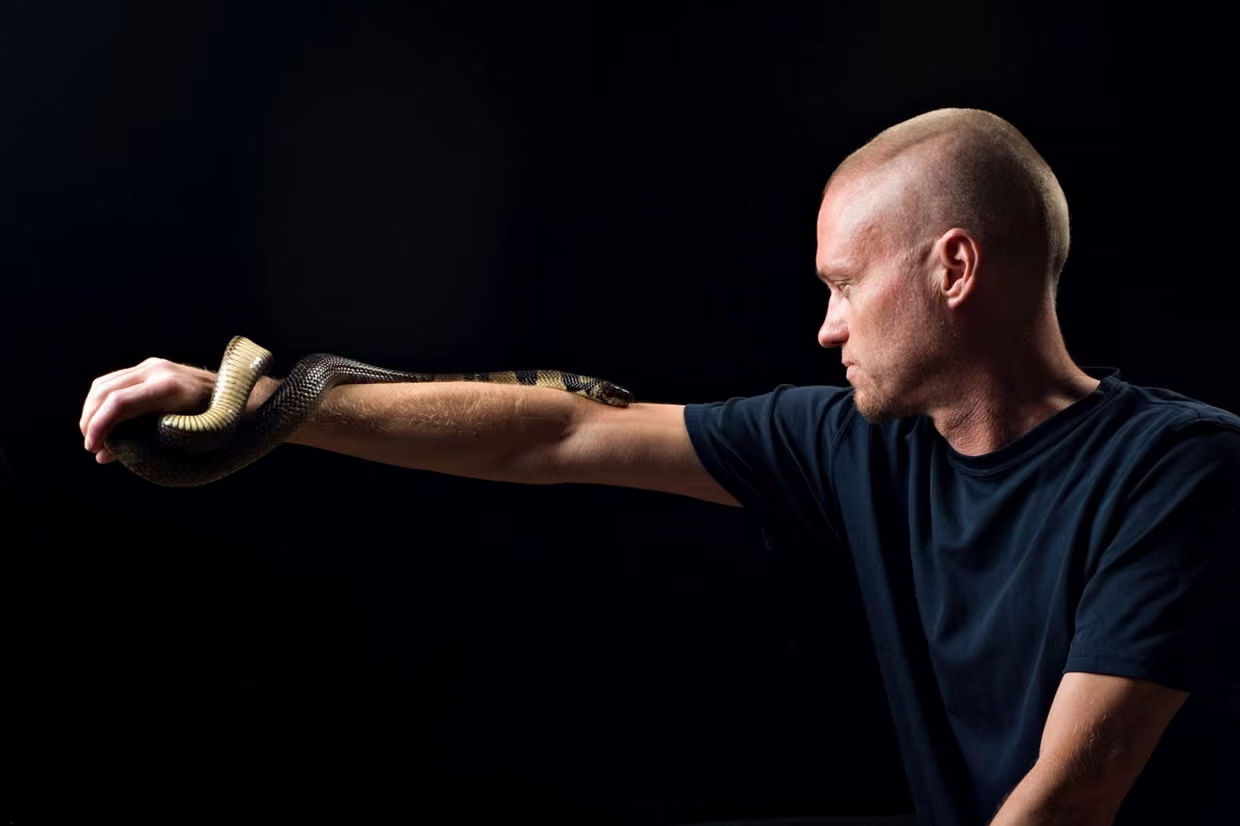
A man in the United States who intentionally allowed venomous snakes to bite him more than 200 times over nearly two decades may now help scientists develop a broad antivenom that could save lives around the world. Tim Friede, 58, carried out the painful and dangerous experiment to build immunity against some of the deadliest snakes on Earth.
Friede, who had no formal scientific training, began injecting himself with small doses of venom before later allowing snakes to bite him directly, often on the fingers or forearm. His effort nearly killed him several times, including an early incident in 2001 when bites from a monocled cobra and an Egyptian cobra within the same hour left him in a coma for days.
Despite repeated close calls, Friede continued the experiment for years, determined to find a way to protect people from snakebite deaths. His work has now drawn scientific interest from Centivax, a California company trying to create a near universal antivenom using antibodies from his blood. A study cited in the article found that replicated antibodies from Friede could neutralize toxins from 19 snakes in the elapid family, including cobras, mambas, taipans, coral snakes and kraits.
The story also highlights a growing global risk. Snakebites already cause about 138,000 deaths and 400,000 disfigurements or disabilities each year, with millions more people bitten worldwide. Researchers warn that climate change is likely to worsen the problem as hotter conditions increase contact between snakes and humans.
A trial of the new antivenom is expected to begin on pets in Australia before any use in humans. For Friede, the goal has always been bigger than his own ordeal: helping create a treatment that could protect vulnerable people, especially in poorer parts of Asia and Africa where snakebite remains a major threat.
