


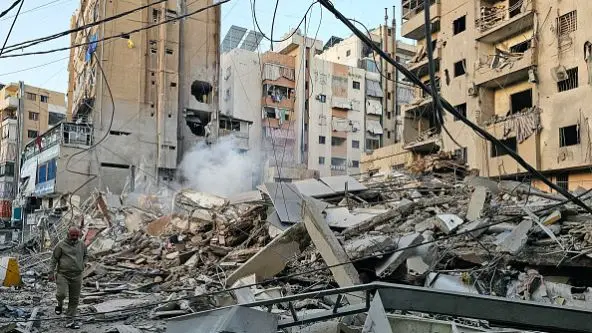
The war in the Middle East showed no sign of easing on Tuesday, with fresh missile attacks, new Israeli strikes, and growing uncertainty over whether diplomacy can still make progress. As the conflict deepens, governments and markets are reacting to both the military and economic fallout.
First, Iran launched new waves of missiles into Israel, adding to fears of a broader regional escalation. The attacks came after President Donald Trump said there had been productive contacts over a possible diplomatic opening, a claim that Iranian officials quickly rejected.
Second, Israel responded with a new round of strikes in Tehran, hitting dozens of targets that Reuters reported included intelligence and missile related sites. The exchange underlined how quickly hopes of de escalation were overtaken by renewed military action.
Third, uncertainty around possible US Iran talks remains high. The White House has signaled that diplomatic efforts are still shifting, but Tehran has dismissed public suggestions of negotiations, calling them false. That gap between Washington’s message and Iran’s response has made any immediate breakthrough look doubtful.
Fourth, oil prices climbed back above $100 a barrel as markets reassessed the risk to global supply. Brent crude rose above that level after Iran denied there were talks with the United States, reinforcing concerns that disruption in the Gulf could last longer than hoped.
Fifth, the Strait of Hormuz remains at the center of the crisis. The waterway is one of the most important energy shipping routes in the world, and the conflict has already disrupted a large share of global oil and gas flows. Bahrain has now pushed for United Nations backed action to protect shipping, while France has proposed a more diplomatic alternative.
Sixth, countries are starting to take emergency economic measures. Japan said it will release joint oil stockpiles by the end of March, while governments and energy officials are warning that a prolonged supply shock could weigh on growth and keep fuel prices under pressure.
Taken together, the latest developments show a conflict that is still expanding on several fronts at once: military, diplomatic, and economic. With missile exchanges continuing, shipping security under threat, and oil markets on edge, the wider region remains in a highly unstable position.
