


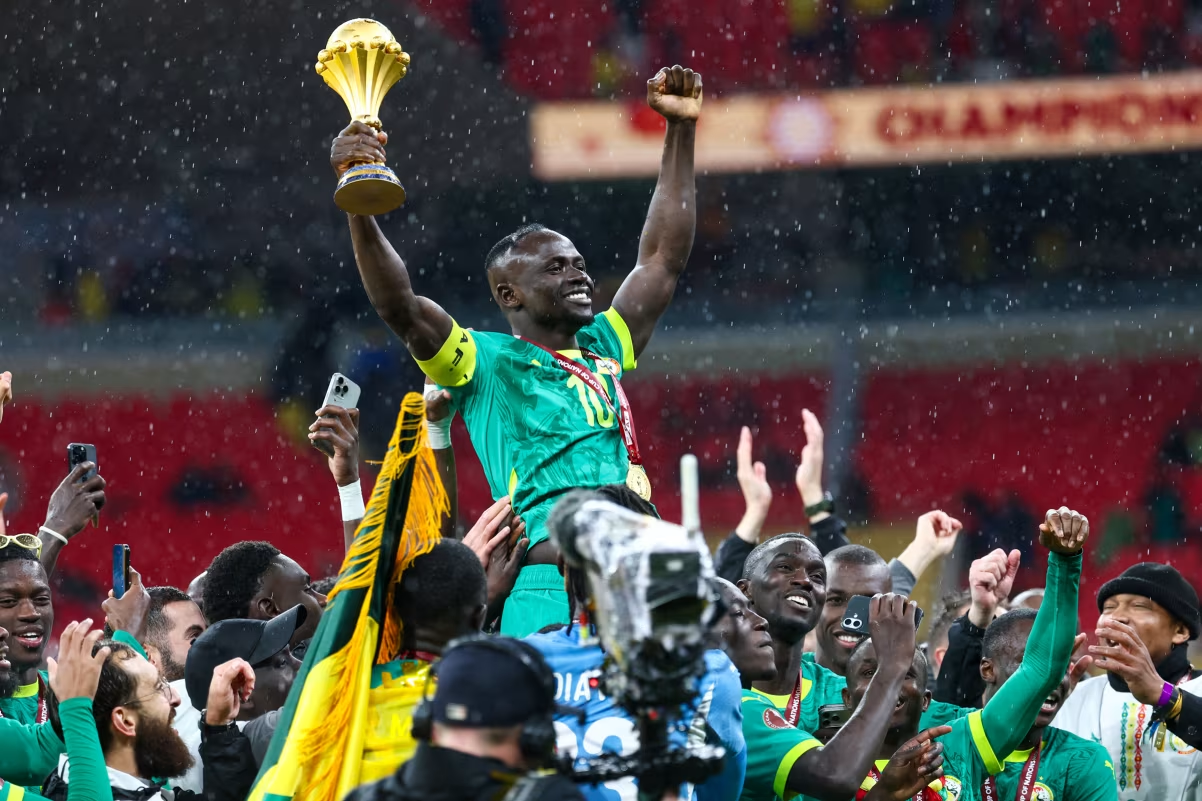
Senegal won the Africa Cup of Nations final on the pitch. That is the part many fans will not let go of, and honestly, they should not. The match was played, the drama unfolded, Morocco missed the late penalty, and Senegal went on to win 1 to 0 after extra time. Then, days later, CAF’s Appeal Board stepped in and turned that result into a 3 to 0 forfeit win for Morocco because Senegal had left the field for about 14 minutes during the chaos near the end of normal time.
That is where this stops feeling like football governance and starts looking like bureaucracy with a whistle. Yes, Senegal’s walk off was a breach of tournament regulations. CAF says Articles 82 and 84 gave it the basis to declare a forfeit. But this was not a team that abandoned the match and refused to continue. Senegal returned, the referee allowed the game to resume, the penalty was missed, and the final reached a sporting conclusion in full view of the world. Rewriting that after the fact makes the competition feel less like a contest and more like a legal trap.
That is why the decision feels so tone deaf. Football is built on the idea that titles are earned in front of the crowd, under pressure, in the moment. Once officials allow a game to continue and finish, fans expect the result to mean something. Taking the trophy away afterward tells supporters that what they watched was somehow less important than what was argued in a boardroom later. It is hard to think of a better way to damage trust in a tournament. CAF president Patrice Motsepe himself admitted African football is already dealing with trust and integrity issues. This ruling only poured fuel on that fire.
There is also a bigger image problem here. African football has spent years fighting for greater respect, stronger commercial power, and global credibility. So what happens when the biggest tournament on the continent ends with one country celebrating on the field and another country being declared champion in an appeals ruling afterward? It becomes a story about confusion, politics, and process instead of the football itself. That is a disaster for the competition’s reputation.
None of this means rules should not matter. They do. A team cannot simply walk off whenever it dislikes a decision. But rules are supposed to protect the sport, not overpower common sense. If the referee, in the heat of the final, chose to restart the match and carry it through to the end, that should have counted for far more than it apparently did. Senegal’s argument is exactly that: the game was completed under the referee’s authority, and that should have settled it. Senegal’s federation has already said it will appeal to the Court of Arbitration for Sport.
What makes this worse is the message it sends to fans across Africa. It tells them that even after 120 minutes of football, the result might still depend on who argues best in the aftermath. It tells players that winning the game may not be enough. And it tells everyone watching that those running the sport are still too far removed from the basic truth that football belongs first to the pitch, not the paperwork. That disconnect is exactly why this decision feels so out of touch.
Senegal may yet win on appeal. Maybe CAS will restore the title, maybe it will not. But the damage is already done. CAF had a chance to show wisdom, restraint, and feel for the game. Instead, it chose the coldest possible interpretation. Senegal lifted that title by playing and winning. Stripping it away later may satisfy the rulebook, but to many fans, it will never feel like justice.
