


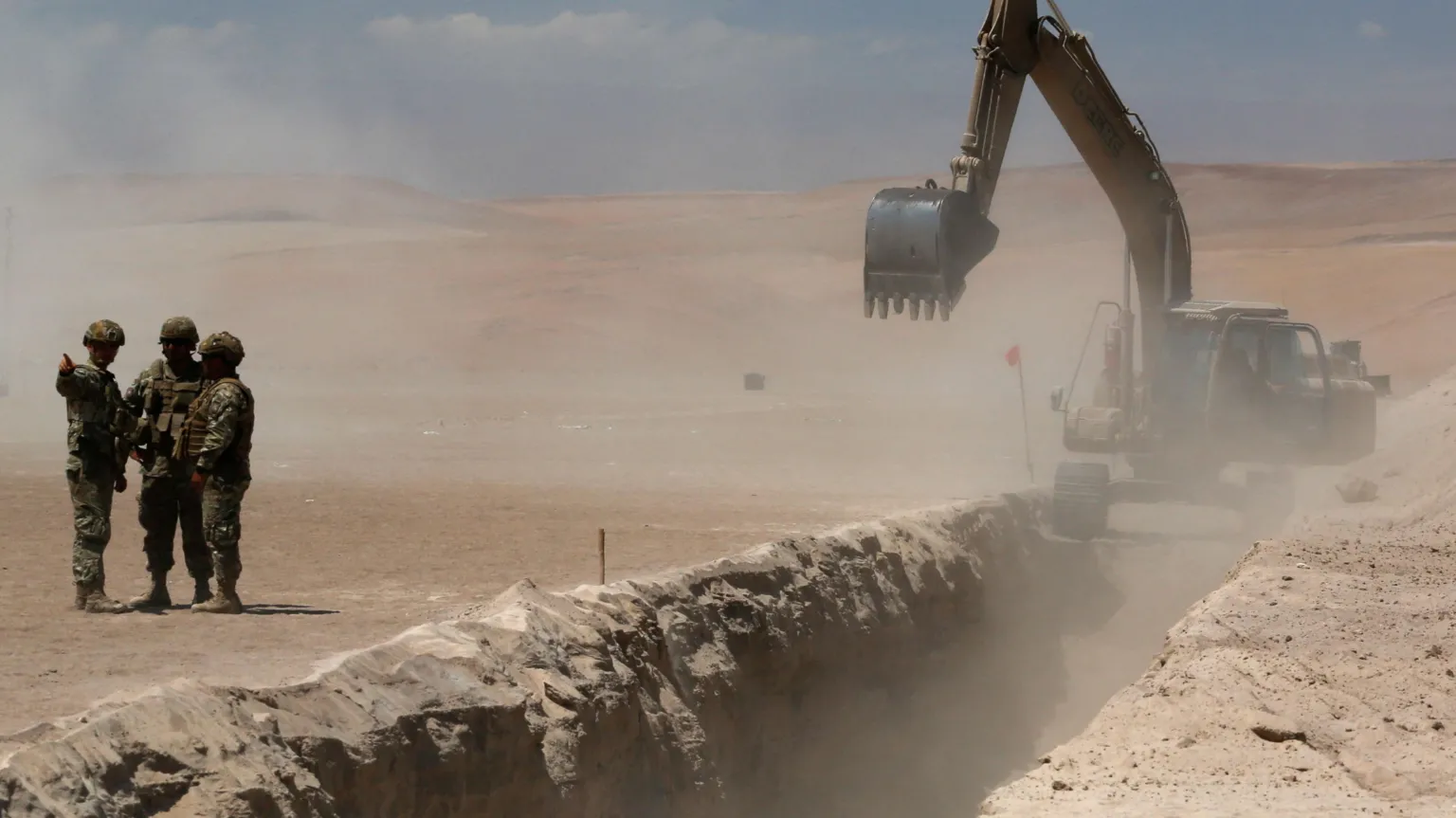
Just five days after being sworn in, Chilean President José Antonio Kast has moved quickly on one of his biggest campaign promises, starting work on a new border barrier along Chile’s northern frontier with Peru. On Monday, Kast visited the site near Arica, where construction crews have begun digging the first trench in the dry Atacama desert. The initial section is still small, only a ditch a few feet wide and deep, but the government is presenting it as the opening stage of a much bigger border security plan.
Standing beside heavy machinery at the site, Kast described the project as a major national moment and said Chile had been harmed by illegal immigration, drug trafficking, and organised crime. He said the aim was to use the new works to help build what he called a more sovereign Chile. The barrier forms part of his “Border Shield” policy, which was a central message in the campaign that brought him to power.
The project reflects the hard line approach Kast promised during the election. His plan includes a mix of trenches, fences, surveillance systems, and military patrols along parts of the border. Chile shares about 180 kilometres with Peru and around 900 kilometres with Bolivia, although officials have indicated the barrier will cover only part of those northern border zones rather than the full length.
Kast’s move has already drawn comparisons with Donald Trump’s border rhetoric in the United States. Like Trump, Kast has made immigration control one of the defining issues of his presidency, and his supporters have openly borrowed some of that political style. Reuters and AP both note that the Chilean president has pushed a message focused on sovereignty, security, and stricter control of undocumented migration.
The new president took office on March 11, 2026, succeeding Gabriel Boric, and his election has been widely described as Chile’s sharpest move to the right in decades. Since entering office, Kast has also pushed broader austerity and security measures, including significant spending cuts and decrees tied to border enforcement.
Chile remains one of the more stable countries in South America, but concern over crime and migration has grown in recent years. According to reporting cited by AP and Reuters, the country’s foreign born population has risen sharply over the past decade, and officials estimate that hundreds of thousands of migrants are living in Chile without documents, many of them from Venezuela. That shift has become a major political issue and helped shape the mood that brought Kast to office.
For Kast, the trench near the Peru border is more than construction work. It is an early symbol of the kind of presidency he wants to lead, one focused on control, order, and a visible break from the previous government. Whether the wider barrier will have the impact he promises remains to be seen, but the message from his first week in office is already clear. Immigration and border security will sit at the centre of his administration.
