


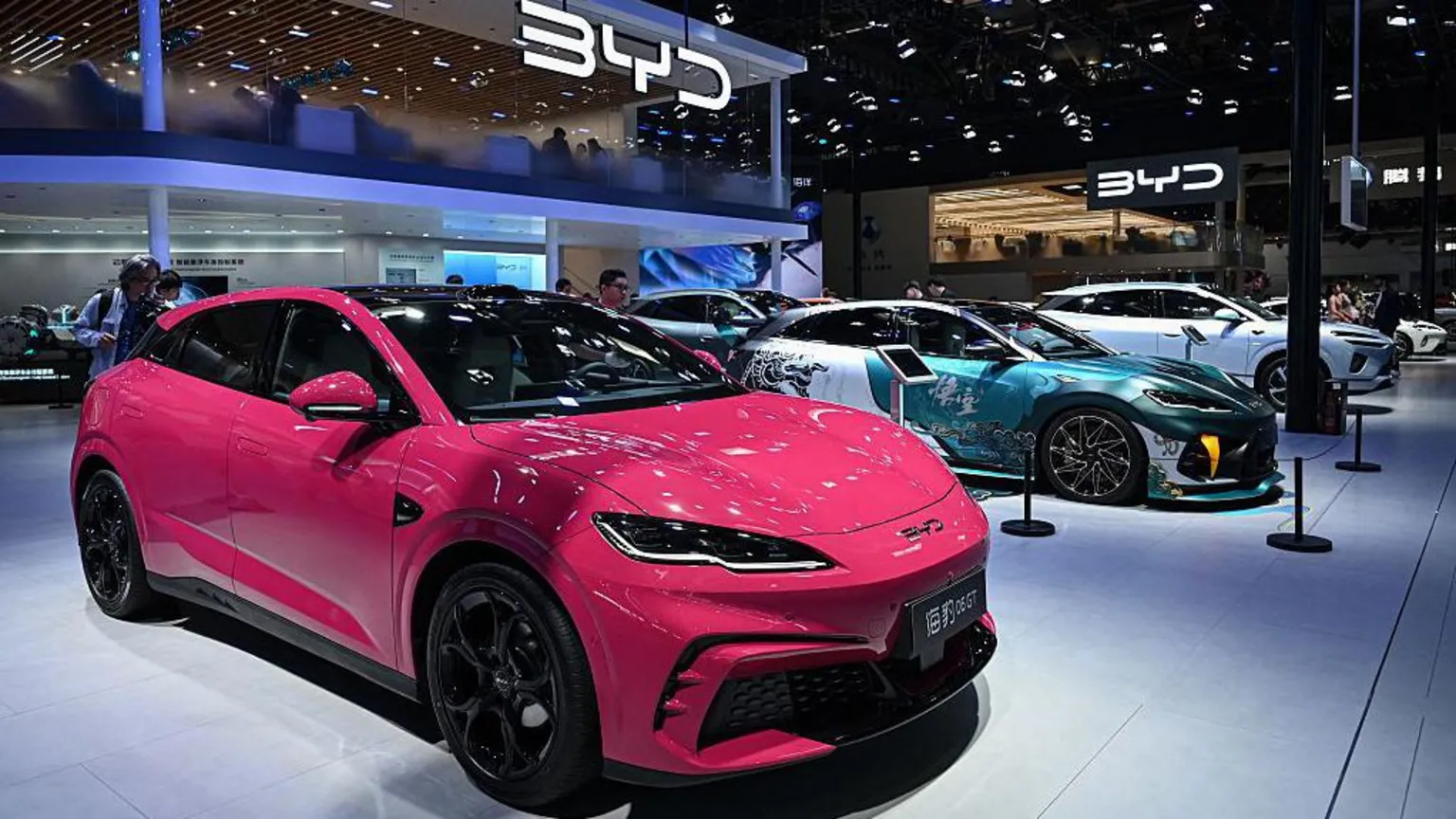
Chinese electric vehicle giant BYD says it can continue growing strongly even without access to the United States market, as the company expands across other parts of the world and strengthens its position in the global shift away from petrol and diesel cars. The message comes at a time when trade tensions, tariffs and national security concerns have made the US a difficult market for Chinese automakers.
BYD has become one of the most important names in the electric vehicle industry. The company has overtaken major global rivals in several areas and is now pushing its cars into international markets where demand for cleaner and cheaper transport is rising. Reuters reported that BYD has set an overseas sales target of 1.5 million vehicles in 2026 and believes international markets could eventually account for about half of its business.
The United States remains largely closed to Chinese electric vehicles because of high tariffs and political resistance. But BYD appears confident that it does not need America in order to succeed. The company is focusing instead on markets such as Europe, Southeast Asia, Latin America and other regions where governments and consumers are more open to affordable electric cars.
That strategy is being supported by technology upgrades. Reuters reported that BYD is doubling down on super fast charging technology to win over drivers who are still worried about switching from petrol cars to electric vehicles. Its new “flash” charging system can reportedly charge batteries from 20% to 97% in under 12 minutes and deliver a range of up to 777 km, depending on the model and conditions.
BYD also plans to build a major charging network, with 20,000 flash charging stations in China and 6,000 international stations within a year. This shows the company is not only selling cars, but also trying to solve one of the biggest concerns for EV buyers: charging speed and convenience.
Still, BYD faces pressure at home. China’s electric vehicle market has become extremely competitive, with brands such as Geely, Leapmotor, Xpeng and Xiaomi fighting for buyers. Reuters reported that BYD has faced seven straight months of domestic sales declines, showing that even the market leader is not immune to China’s intense EV price war.
The company’s global expansion may therefore be more than just ambition. It is also a way to reduce dependence on China’s crowded domestic market. Overseas sales rose strongly in Europe in 2025, and BYD is now aiming to turn international growth into a central part of its long term business model.
BYD’s confidence also reflects a wider change in the global car industry. Chinese automakers are no longer only competing on price. They are now pushing hard into batteries, software, artificial intelligence and driver assistance technology. Reuters reported that China’s auto sector is racing to embed AI into vehicles, following Beijing’s push for next generation smart cars.
For now, the US may remain out of reach for BYD, but the company appears to believe the global opportunity is big enough without it. With rising fuel costs, stronger demand for electric cars and rapid innovation in charging and battery technology, BYD is betting that it can grow worldwide even while staying away from America’s protected car market.
