


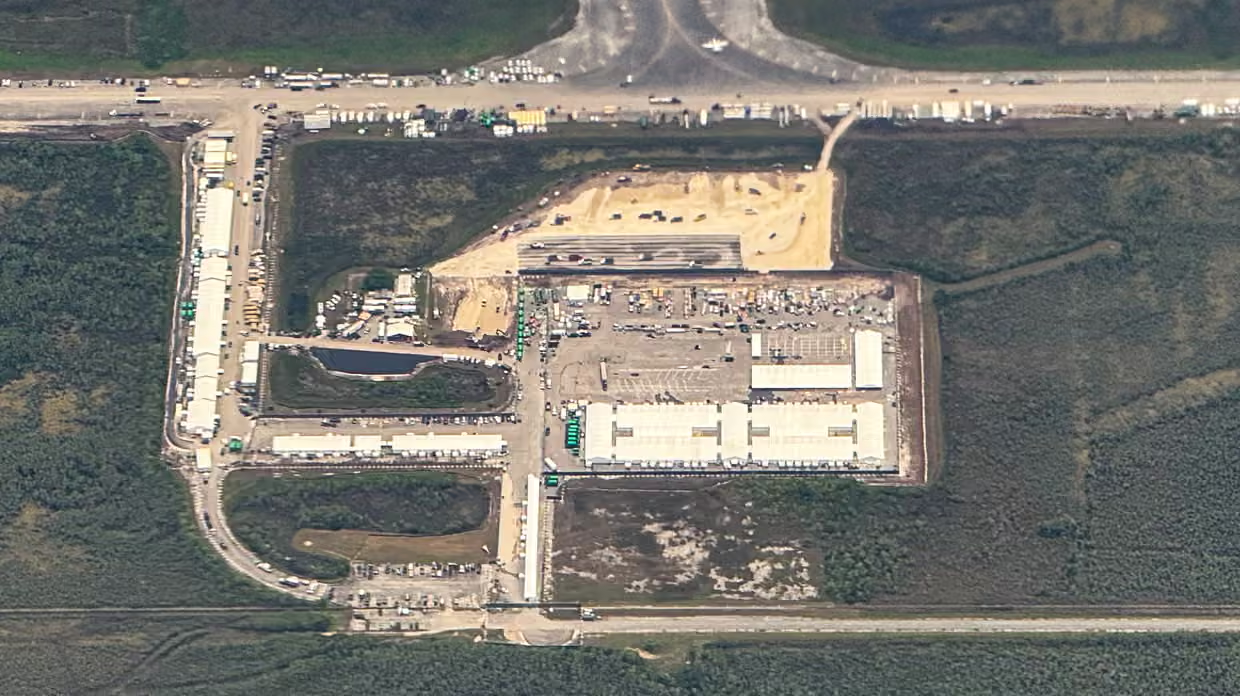
A federal judge has ordered officials at Florida’s immigration detention center known as “Alligator Alcatraz” to improve access for attorneys representing people held there, marking a significant legal setback for the remote Everglades facility. U.S. District Judge Sheri Polster Chappell issued a preliminary injunction requiring the center to allow timely, free, confidential, unmonitored and unrecorded legal calls for detainees.
The ruling also says the facility must provide at least one working phone for every 25 detainees and must clearly share information, in multiple languages, about how detainees and lawyers can contact one another. Attorneys must also be able to make unannounced visits, rather than being forced to rely only on pre scheduled meetings.
The case was brought after lawyers and advocacy groups argued that detainees were being denied meaningful access to counsel. According to court filings and public statements, some detainees were transferred before scheduled meetings, while others struggled to place legal calls or obtain even basic materials such as paper and pencils.
Florida and federal officials had denied violating detainees’ rights, saying any limits were tied to security and staffing concerns. But the judge’s order makes clear that those concerns do not override the need for confidential communication with lawyers, especially in immigration cases where access to counsel can directly affect a detainee’s legal options. This final point is an inference based on the court ordered requirements and the nature of the claims in the lawsuit.
The detention center, opened under Governor Ron DeSantis’ administration, has drawn controversy since its creation because of both its isolated location and complaints about conditions inside. The latest ruling does not shut the facility down, but it does require officials to make immediate changes to how detainees can reach their attorneys.
