


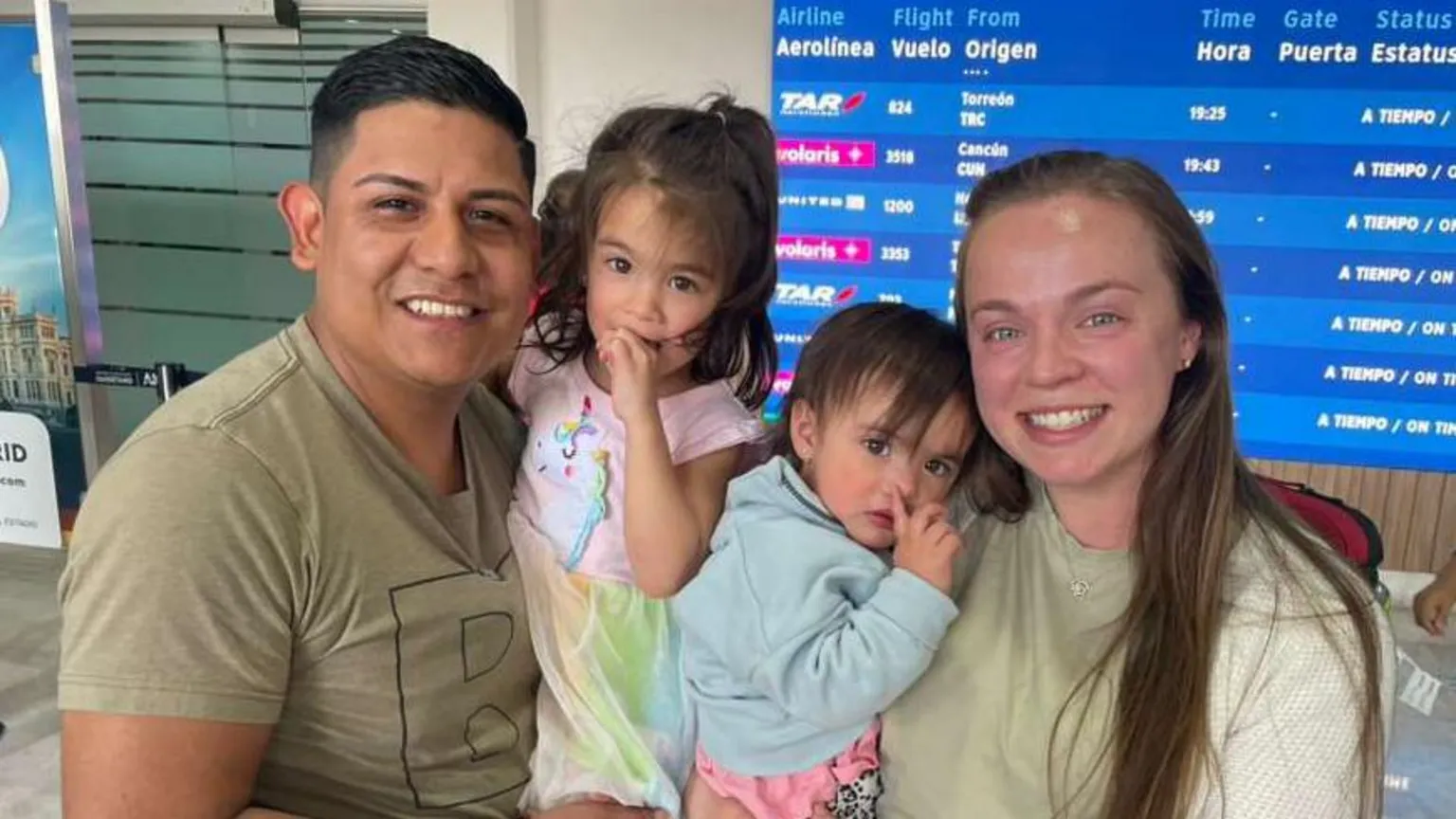
A US woman has moved about 1,500 miles to Mexico to keep her family together after her husband was deported, in a story that has drawn attention to the emotional toll of immigration enforcement on mixed status families. Janie Pérez, a US citizen from the St. Louis area, relocated with her two young children to Puerto Vallarta after her husband, Alejandro Pérez, was removed from the United States.
According to the BBC report carried by AOL, Janie found it strange when Alejandro called her only minutes after leaving home. That call became the start of a life changing ordeal for the family, as Alejandro was taken into immigration custody and later deported.
The family’s situation had been developing for months. A GoFundMe page set up in November 2025 says Alejandro was taken into ICE custody on October 23 and describes him as Janie’s husband of five years and the father of their two daughters, Luna and Lexie. The fundraiser said he was the family’s sole provider and that the family faced legal bills, household costs, and the expense of relocating to Mexico.
Janie’s decision to move reflects a painful choice faced by some families affected by deportation: remain in the United States without a spouse and parent, or leave behind home, relatives, work, and community to rebuild life in another country. In Janie’s case, supporters say she chose family unity, even though it meant uprooting herself and her children from the life they knew in Missouri.
Local reporting from St. Louis had previously described the family’s fight to stay together after Alejandro’s detention. KSDK reported in December 2025 that Janie was trying to keep the family united after ICE detained her husband in St. Louis County.
The case has become part of a wider debate over immigration enforcement in the United States, especially when deportations involve spouses and parents of American citizens. Supporters of stricter enforcement argue that immigration laws must be applied, while affected families and advocates say the system can punish people who have built families, worked, paid taxes, and established deep community ties.
For Janie and Alejandro, the debate is not abstract. It has meant separation, uncertainty, legal costs, and a new life in Mexico. Their story shows how deportation decisions can reshape an entire family’s future, not just the life of the person removed.
