


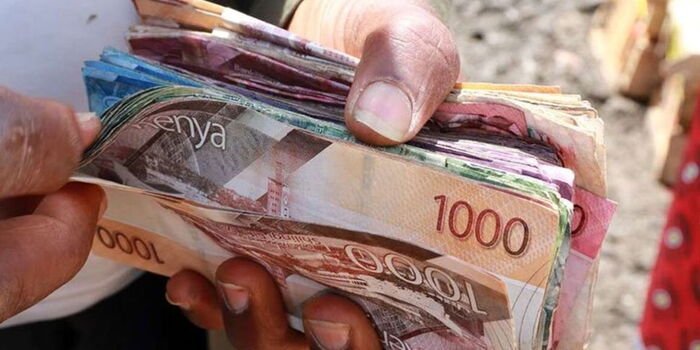
The Central Bank of Kenya (CBK) says the shilling will hold steady against the U.S. dollar, pointing to a USD619 million, approximately Ksh80 billion balance of payments surplus and strong reserves as proof the country can weather current global shocks.
CBK Governor Dr Kamau Thugge made the assurance while addressing concerns about external economic pressure, particularly uncertainty stemming from U.S. trade policies that have unsettled currencies across emerging markets worldwide.
Thugge stated categorically that the surplus figure remained solid even after the bank applied conservative assumptions, including slower export growth, reduced remittance inflows, and lower tourism earnings across the projection period.
“We have taken into account much lower export growth. We have assumed a deceleration in remittances. We have assumed tourism receipts, lower growth in tourism receipts,” he stated, highlighting the cautious methodology applied.
He added that despite those deliberately subdued projections, the Ksh80 billion surplus held gives CBK confidence that Kenya’s external finances are resilient enough to absorb the current wave of global economic turbulence.
“We were waiting for this kind of shock,” stated Governor Thugge, adding, “That is why we built up our reserves to the level where they are now,” he said, adding that exchange rate volatility remains manageable going forward.”
Separately, the CBK is in active negotiations with the International Monetary Fund (IMF) to secure a new funded program after the previous $3.6 billion arrangement, approximately Ksh850 billion, expired in March 2025, and Governor Thugge stated that talks are ongoing with representatives from both sides.
That 38-month deal, structured under the Extended Credit Facility and Extended Fund Facility, lapsed before full disbursement, leaving Kenya without a tranche worth Ksh110 billion, which is approximately USD850 million.
Thugge confirmed an IMF mission is expected in early 2026 to negotiate the new programme, running concurrently with Article IV consultations focused on economic stability, debt management, and structural reforms.
