


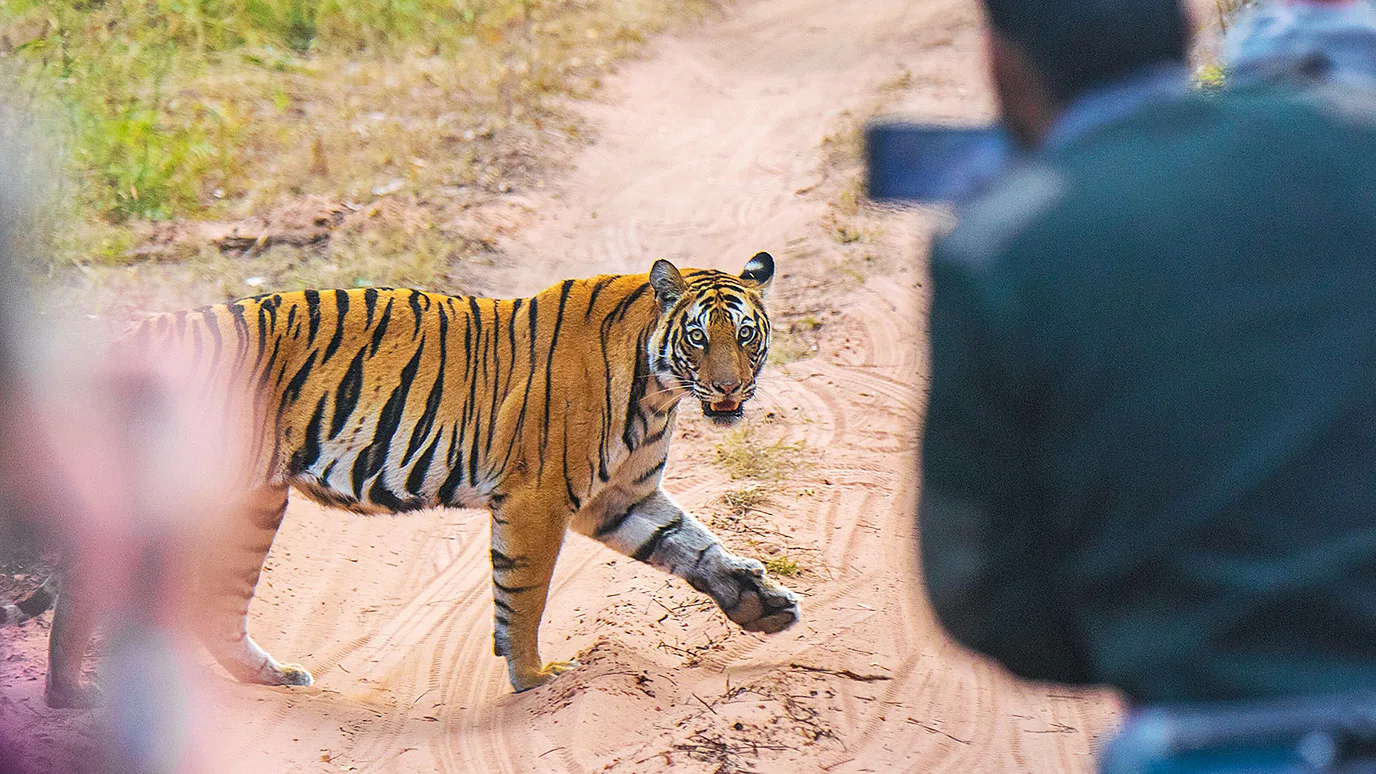
Wildlife destinations are beginning to say “no” to tourists in new ways, as parks and reserves move to protect animals from the growing pressure of selfie culture, mobile phone use and overcrowded safaris.
The latest example comes from India, where authorities have introduced tougher rules in tiger reserves after concerns that tourists were getting too close to animals in search of photos and videos. Reports say India’s Supreme Court ruling has led to restrictions on mobile phone use in core tiger tourism zones, along with limits on night safaris and development near protected areas.
The concern is not simply that tourists are taking pictures. The bigger problem is what often happens around the picture. Vehicles may crowd around one animal, visitors may shout, guides may share animal locations too quickly, and people may forget safety rules while trying to capture a dramatic social media moment.
In Karnataka, the forest department has directed safari visitors to keep phones on airplane mode and has prohibited selfies during safaris. Officials said anything that causes disturbance during wildlife viewing should not be used, while noting that safari zones must remain controlled and respectful of animals.
Similar restrictions have also been reported in other Indian reserves. The Times of India reported that phone use was banned inside Rajaji Tiger Reserve in line with a Supreme Court directive aimed at reducing human interference in core tiger habitats. Officials said mobile use can contribute to crowding, stress wildlife and disturb natural behaviour when animal locations are quickly shared.
Ranthambhore Tiger Reserve has also implemented a mobile phone ban in its core tourism zones. The rule applies to tourists, guides, naturalists and safari drivers, with authorities saying the aim is to reduce disturbance and protect the reserve’s natural environment.
The issue is part of a wider global debate about wildlife tourism. In many places, animals have become part of the social media economy, with visitors treating close encounters as content opportunities. Conservation groups have warned for years that wildlife selfies can encourage harmful behaviour, especially when animals are touched, crowded, chased or used as photo props. World Animal Protection says many wild animals used for tourist selfies are taken from their natural habitats and kept in poor conditions for entertainment.
The new restrictions show that destinations are trying to change the culture around wildlife travel. Instead of promising tourists unlimited access, parks are increasingly reminding visitors that conservation comes first. The message is simple: seeing a wild animal is a privilege, not a right to disturb it.
For tourists, this means the future of wildlife travel may feel different. Visitors may have to accept fewer photos, more distance, tighter rules and stronger instructions from guides. Some may find that frustrating, especially in a world where travel is often measured by what people can post online.
But for animals, these limits could make a real difference. Less noise, fewer crowds and reduced pressure from cameras can help wildlife behave more naturally and reduce the risk of dangerous encounters between animals and people.
The trend also points to a healthier form of tourism. Instead of chasing the perfect selfie, travelers are being encouraged to slow down, observe quietly and respect the environment they came to see. In the long run, that may make wildlife experiences more meaningful, not less.
Wildlife destinations are not rejecting tourism completely. They are rejecting the kind of tourism that puts animals, visitors and conservation work at risk. As more parks adopt stricter rules, the message is becoming clearer: the best wildlife encounter is one where the animal remains wild, undisturbed and safe.
