


South Korea is stepping up efforts to secure oil from outside the Middle East, including from African producers, as disruption at the Strait of Hormuz continues to threaten one of Asia’s most important energy supply routes. President Lee Jae Myung said this month that the country must balance risk carefully while expanding alternative supply options.
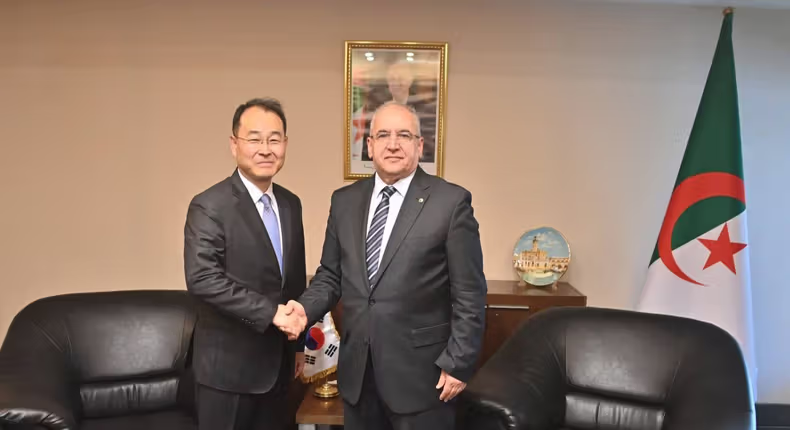
Reuters reported that South Korea has been consulting countries including Algeria as part of its search for new crude routes, while the foreign ministry has also been pursuing alternative energy diplomacy in Congo, Algeria and Libya alongside Kazakhstan. Those moves reflect growing concern in Seoul over its heavy dependence on Hormuz linked shipments.
The pressure is significant because South Korea imported around 61% of its crude oil and 54% of its naphtha through the Strait of Hormuz last year, according to Reuters. With the route still unstable, the government has been trying to spread supply risk across more countries and transport corridors.
So far, South Korea says it has secured 273 million barrels of crude oil and 2.1 million metric tons of naphtha via routes outside the strait through the end of the year. Most of that volume is coming from Saudi Arabia, Oman and Kazakhstan, but the outreach to African suppliers shows Seoul is widening its energy search as the crisis drags on.
The shift also comes as the economic effects are already being felt at home. Reuters reported this week that South Korea’s import prices rose at the fastest pace in more than three years in March, driven largely by the jump in oil prices linked to the Middle East conflict.
Overall, South Korea’s push into Africa for possible oil support highlights how the Hormuz disruption is forcing major importers to rethink long standing supply patterns and move faster on diversifi
